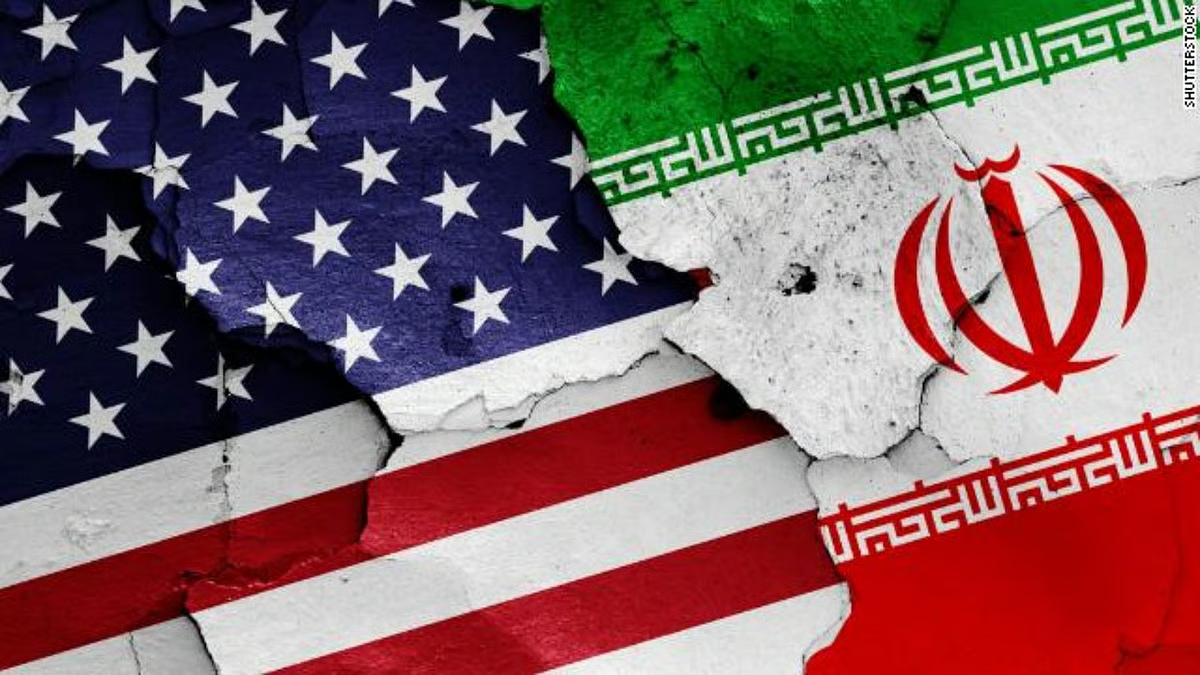
Washington, D.C.: A newly announced two-week ceasefire between the United States and Iran has sparked sharp political reactions across Washington, highlighting deep divisions over the path forward in a volatile geopolitical moment.

The truce, unveiled by President Donald Trump, calls for a temporary halt in hostilities and opens the door for further diplomatic engagement. A key component of the agreement includes efforts to ensure the safe reopening of the Strait of Hormuz, a vital artery for global energy supplies.
Supporters See Strategic De-escalation
Some lawmakers have welcomed the move as a pragmatic step toward reducing immediate tensions. Republican Congressman Morgan Griffith backed the administration’s approach, suggesting that sustained pressure helped bring Iran to the negotiating table. He emphasized that any long-term agreement must prevent Iran from advancing nuclear capabilities.
Similarly, Brian Fitzpatrick described the ceasefire as a constructive opening for diplomacy, while stressing the need for continued vigilance and strong congressional oversight.
Senator Lindsey Graham also voiced cautious support, urging policymakers to carefully assess developments before drawing firm conclusions about the deal’s long-term impact.
Critics Raise Concerns Over Strategy
Not all reactions have been positive. Congressman Frank Mrvan questioned the administration’s strategy, arguing that recent actions lacked clarity and exposed American forces to unnecessary risks. He also pointed to the economic strain felt domestically as tensions pushed up costs.

California Congressman Kevin Kiley raised broader concerns about accountability, stressing that military actions must align with legal frameworks and national values, with Congress playing a key oversight role.
Debate Over Tone and Global Image
The tone of U.S. messaging has also come under scrutiny. Senator Lisa Murkowski warned that certain rhetoric could undermine America’s global standing and complicate diplomatic efforts.
Echoing similar concerns, Senator Ruben Gallego highlighted the importance of maintaining ethical and legal standards, noting that credibility on the world stage is closely tied to how the U.S. conducts itself during crises.
High Stakes Around a Critical Waterway
At the heart of the ceasefire lies the strategic importance of the Strait of Hormuz, through which a significant share of the world’s oil passes. Any disruption in this corridor has immediate global consequences, particularly for energy markets and import-dependent economies.
While the agreement offers a brief pause in tensions, its long-term success will depend on sustained negotiations and mutual trust. For now, the truce has not only eased immediate fears of escalation but also ignited a broader political debate in Washington over diplomacy, security, and America’s role on the global stage.